How to Automate Repetitive Tasks and Save Time Every Working Day
Modern work often involves small activities that consume far more time than expected. Learning how to automate repetitive tasks can help professionals reduce manual effort, improve consistency, and focus on work that requires creativity, strategy, and decision-making.
Repetitive work appears in almost every industry. Copying information between applications, renaming files, sending routine messages, updating spreadsheets, and creating reports can take hours each week. While each action may seem minor, the combined impact can significantly reduce productivity.
Automation allows software to perform predefined actions based on triggers, schedules, or specific conditions. Instead of completing the same sequence manually, users can create workflows that handle these actions automatically. This approach reduces interruptions and creates a more efficient working environment.
For example, a marketing professional may regularly collect campaign data from multiple sources. An automated workflow can gather information, organize it, and prepare a report without requiring the same manual process every time. Similar workflows can support sales, administration, finance, and customer service.
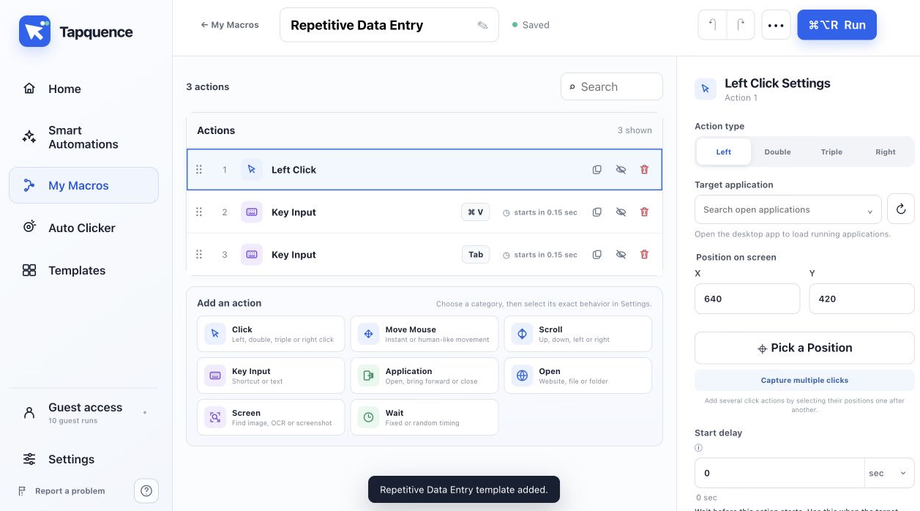
One major benefit of automation is improved accuracy. Manual processes can lead to typing mistakes, missed steps, or inconsistent formatting. Automated workflows follow the instructions provided, helping teams maintain reliable processes and reducing the need for repeated corrections.
Automation is also valuable for individuals who want to manage their daily digital work more efficiently. Tasks such as sorting downloads, moving documents, creating folders, or processing information can be simplified through well-designed workflows. The goal is not to replace people but to remove unnecessary manual effort.
The best automation opportunities usually involve tasks that are frequent, predictable, and based on clear rules. Before building a workflow, identify which activities consume the most time and break them into simple steps. This makes it easier to determine what should be automated.
Tools such as Tapquence can help users create workflows without turning every process into a complicated technical project. By connecting actions and organizing workflows logically, automation becomes more accessible for people who want practical productivity improvements.
Successful repetitive tasks automation starts with small improvements. Automating one routine process can save valuable time, reduce errors, and create momentum for larger workflow improvements. As daily tasks become more efficient, individuals and teams can spend more energy on meaningful work.


Comments
Post a Comment